
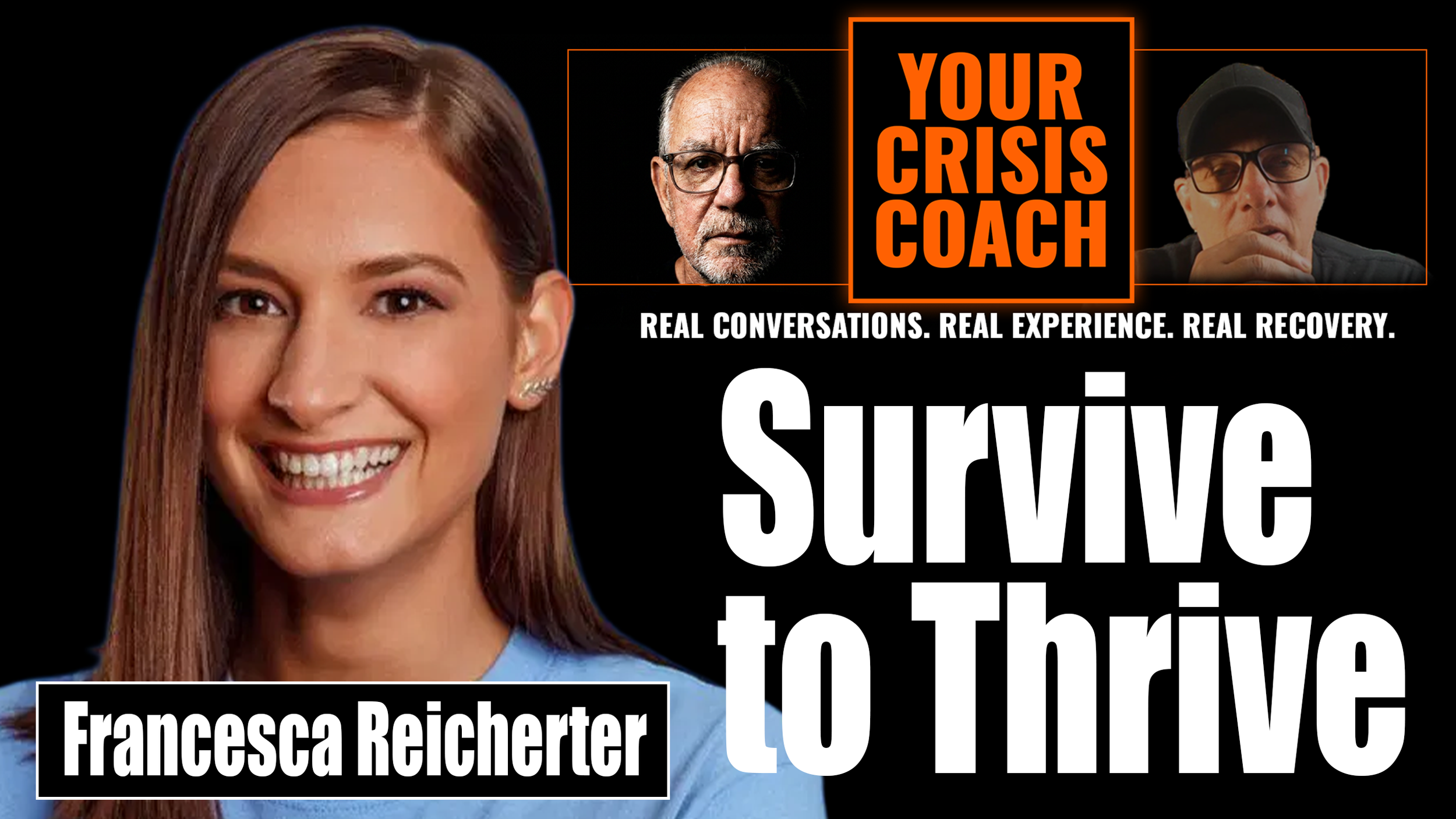
Ask someone in early recovery how they're doing, and you'll almost always get the same answer: "I'm just trying to get through today." It's an understandable instinct — and often a necessary one. But according to mental health advocate Francesca Reicherter, it's also where recovery gets stuck.
Reicherter, founder of the nonprofit Inspiring My Generation, volunteers weekly at a children's inpatient psychiatric unit and at an adult recovery facility. Across both age groups, she noticed the exact same pattern: nobody was thinking about the future. Not because they didn't want to, but because no one had ever asked them to.
The Problem With "Just Survive Today"
"They never think about what could be," Reicherter said of the kids she works with. "They're taught how to just survive this moment." She heard the identical language from adults in recovery: How do I survive today? It wasn't defiance or denial — it was the only framework anyone had given them. Recovery, as most people experience it, is presented as damage control. Get through the next hour. Get through the next craving. Get through the next day. What comes after that is rarely part of the conversation.
The problem is that a mindset built entirely around survival has no room for imagination. If the only goal is to not fall apart today, there's no space left to ask what a life could actually look like six months or six years from now. As Reicherter put it, recovery starts to feel conditional — an if instead of a when. "What happens if I make it through this? And it became an if."
Shifting the Question
Reicherter's response was to change the question she was asking the people she worked with — not "how do you get through today," but "what could today build toward?" She describes it simply: treatment can still include what you need to do right now to survive, but it should also include what you can do to thrive. That single addition — thrive — changes the entire orientation of the work.
It also reframes what the hard parts of someone's story are for. "How can we take your experience and make it something?" Reicherter asks. Not to minimize what someone has been through, but to give it a direction. Whether that means using it to inspire someone else, to help other people going through the same thing, or simply to build a life that feels worth having — the point is that suffering doesn't have to just be endured. It can become material for something.
Why This Matters Beyond the Individual
This isn't just a philosophical reframe — it shows up in how people actually engage with recovery. Reicherter's own turning point came after she got out of a psych unit and spent a year figuring out how to survive, one day at a time. It was only once she started building something — cards, worksheets, eventually a nonprofit — that recovery stopped being something she was just enduring and became something she was moving toward.
Co-host Scott Silverman, who has spent decades working with people in addiction recovery, echoed the same pattern from the other side of the table: people struggling with addiction are almost always fixated on today, rarely on next year. And once someone does make it through the hardest stretch, the work isn't over — it's just beginning. "It's not, 'oh, I'm better now, what do I do now?'" Silverman noted. People coming out of crisis often haven't been taught how to want more, because no one ever told them they were entitled to.
What This Looks Like in Practice
Reicherter's own tools — a board game called Pieces of You, encouragement cards, and a series of workbooks — all share this same underlying design: they don't just ask someone to cope. They ask someone to express, to imagine, and to leave with something tangible in hand. A card someone can keep. A workbook they can write in. A future self they can write a letter to. Small, physical proof that there's a version of them still being built.
For families, clinicians, and organizations supporting someone in crisis, the takeaway is straightforward: survival-focused support is necessary, but it isn't sufficient on its own. Recovery conversations that never make room for the future risk keeping people permanently in triage mode — stable, maybe, but never given a reason to imagine past it.
If you're supporting someone through crisis or recovery — whether as a parent, a clinician, or an organization — the conversation doesn't have to stop at survival. Learn more about Francesca Reicherter's work, including her workbooks and the Pieces of You board game, at francescareicherter.com and inspiringmygeneration.orgFor more conversations like this one, visityourcrisiscoach.com