
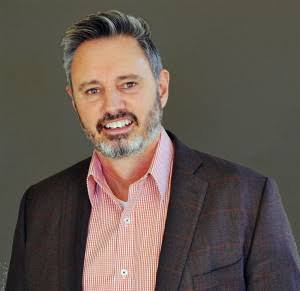
KEN SEELEY joined us to discuss Addiction
https://intervention911.com/
There's a number that interventionist Ken Seeley has been repeating for years, one he mentioned again on a recent episode of Your Crisis Coach: 75% of relapses can be traced back to the family. Not to the treatment center. Not to the strength of the person's willpower. To the family.
It's an uncomfortable statistic, and it's supposed to be. Because the instinct in most households where addiction shows up is to locate the problem entirely inside the person who's using. They're the one who lied. They're the one who disappeared for three days. They're the one who came home from a 28-day program and relapsed within the month. The logic seems airtight: they have the illness, so the work of recovery belongs to them.
Seeley's number says otherwise. And it lines up with what the addiction medicine field has been arguing for years — that addiction isn't an individual disease. It's a family disease.
The System Doesn't Change Just Because One Person Left the House
Here's the mechanism, according to Seeley: when a family sends their loved one to treatment, they tend to treat it like a repair job. Drop the broken part off, wait for it to come back fixed, resume normal life. But the "normal life" the person returns to is the same system that existed before they left — the same patterns, the same unspoken rules, the same roles everyone in the house had been playing for years, sometimes decades.
The person who went through treatment has spent weeks doing intensive work on themselves. Everyone else in the house hasn't done any work at all. So the family reacts to the returning person exactly the way it always has — and the person, now newly sober and often more emotionally raw than before, walks straight back into a structure that never adapted to support the change they're trying to make.
This is why Seeley's organization shifted its entire model over the years. Early on, the focus was almost entirely on what he calls the IP — the identified person, the one everyone points to as "the problem." Now the emphasis has moved toward the family system as a whole. Not because the individual doesn't need help, but because helping only the individual and leaving the system untouched is, statistically, a losing strategy.
Enabling Recovery Is Not the Same Skill as Enabling Addiction
One of the sharper points raised in the conversation is that families already know how to enable addiction — often without realizing that's what they're doing. Bailing someone out, covering for them, softening consequences, hoping quietly that things will just get better on their own. These are learned behaviors, refined over years of crisis management.
What most families have never learned is the opposite skill: how to enable recovery. That requires an entirely different set of instincts — ones that often feel counterintuitive or even cruel in the moment, like allowing a consequence to actually land instead of intervening to soften it.
This distinction matters because it reframes the 75% statistic. It's not that families are failing morally. It's that they're applying the only toolkit they have, and that toolkit was built for crisis containment, not long-term change.
The Empty Threat Problem
A recurring pattern Seeley points to as one of the most damaging: the empty threat. "If you do this again, I'm going to do this." And then, when it happens again — nothing.
Once that pattern is established, the person struggling with addiction receives a clear message, whether or not it's spoken out loud: there are no real consequences here. The threats are noise. And noise is easy to ignore.
Seeley's rule for families going through the intervention process is blunt: never say you'll do something unless you're prepared to do it immediately, the moment the agreement is broken. Boundaries that don't get enforced aren't boundaries. They're just sentences.
Structure Is the Point, Not the Punishment
There's a phrase Seeley used that reframes a lot of what boundary-setting is supposed to accomplish: people in active addiction thrive on structure — even when they resist it. The goal of family involvement isn't to punish the person or to prove a point. It's to build and hold a structure the person can't get around, because the absence of structure is exactly the condition addiction exploits.
That's a different posture than the one most families default to, which tends to swing between two extremes: either rigid ultimatums delivered in anger, or exhausted permissiveness born from years of disappointment. Neither is structure. Structure is steady, and it's collective — which is why it can't be built by one person alone. It has to be a family decision, held consistently by everyone in the house.
The 25% Isn't a Guarantee, Either
It's worth being honest about the other side of Seeley's math. Even among families who did everything recommended, followed every step, engaged fully with the process — some still lost their loved one. Seeley references this directly: a family that did "every single thing we recommended" and still experienced a fatal overdose. Family involvement dramatically shifts the odds. It doesn't eliminate them.
That's not a reason to disengage from the work. It's a reason to be clear-eyed about what the work actually is: not a guarantee, but the single highest-leverage variable families actually have control over.
What This Means If You're in It Right Now
If someone in your family is struggling, the 75% statistic isn't meant to induce guilt. It's meant to redirect where the pressure goes. The instinct to ask "what's wrong with them" is natural, but it's incomplete. The more useful question, according to the people who do this work for a living, is: what needs to change in this house, starting now, regardless of what they decide to do?
That's a harder question. It's also the one with better odds attached to it.
If you're seeing warning signs and don't know where to start, don't wait for a crisis to make the call. Ken Seeley and Eric can be reached at Intervention911.com, or by email at ken@intervention911.com or eric@intervention911.com. For more resources, visit yourcrisiscoach.com.